Greenhouse Solar
PV systems integrated on greenhouse structures that deliver energy generation without compromising the agricultural function of the building — light, temperature, and crop yields protected.
Grow crops. Generate energy. Same roof.
Greenhouse solar (agrivoltaics) integrates photovoltaic panels directly into the greenhouse structure — on the south-facing roof sections, the gable ends, or integrated as semi-transparent glazing panels. The crop keeps growing; the roof starts generating.
Eturn specialises in light-spectrum analysis to ensure panel placement doesn't reduce crop photosynthesis below thresholds agreed with the grower. Every project is designed in collaboration with a horticultural advisor, and our installations have operated in active growing facilities across the Netherlands, Belgium, and Germany.
Double the yield from the same footprint
Crops + Electricity
The same greenhouse structure now generates two income streams simultaneously — agricultural produce and feed-in or self-consumed electricity. No additional land required.
Cut Heating & Lighting Costs
Greenhouse operations are energy-intensive — heating, LED lighting, and climate control. Rooftop solar offsets 40–70% of those costs depending on roof area and crop type.
Shading & Hail Shield
Semi-transparent panels provide partial shading that can reduce heat stress in summer crops and protect delicate plants from hail damage — improving crop quality in warm growing seasons.
Lower Carbon Footprint
Greenhouse growers face increasing regulatory and market pressure to reduce carbon intensity. Solar integration is the single highest-impact step toward a net-zero growing operation.
Three integration strategies for every crop type
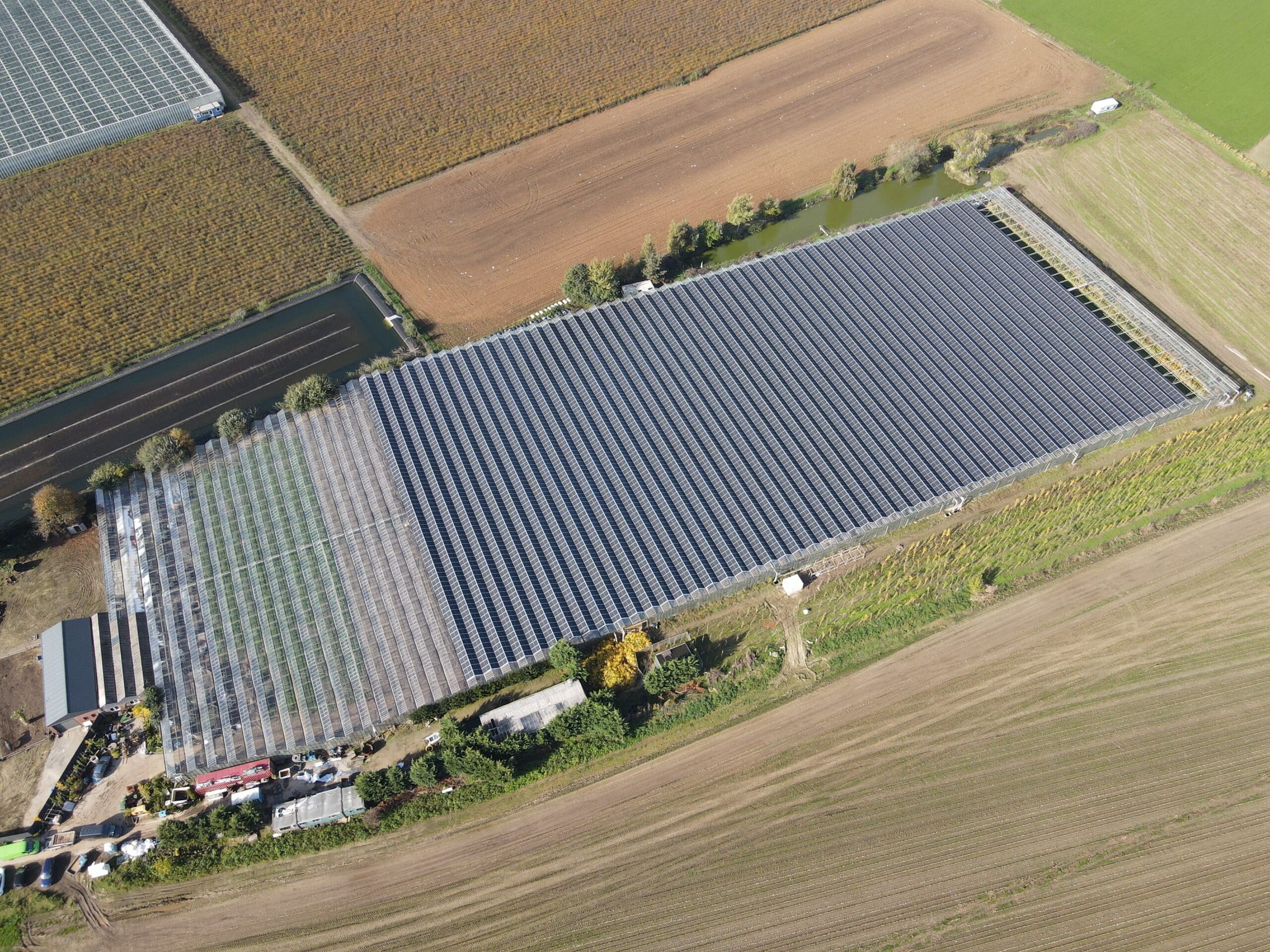
Semi-Transparent Panels
Specially manufactured PV modules that allow a calibrated percentage of diffuse light to pass through to the crop. Typical transmission: 10–30%. Suitable for tomatoes, peppers, cucumbers, and cut flowers.
- 10–30% light transmission
- Custom transparency level
- Uniform light distribution
- Horticulture-certified
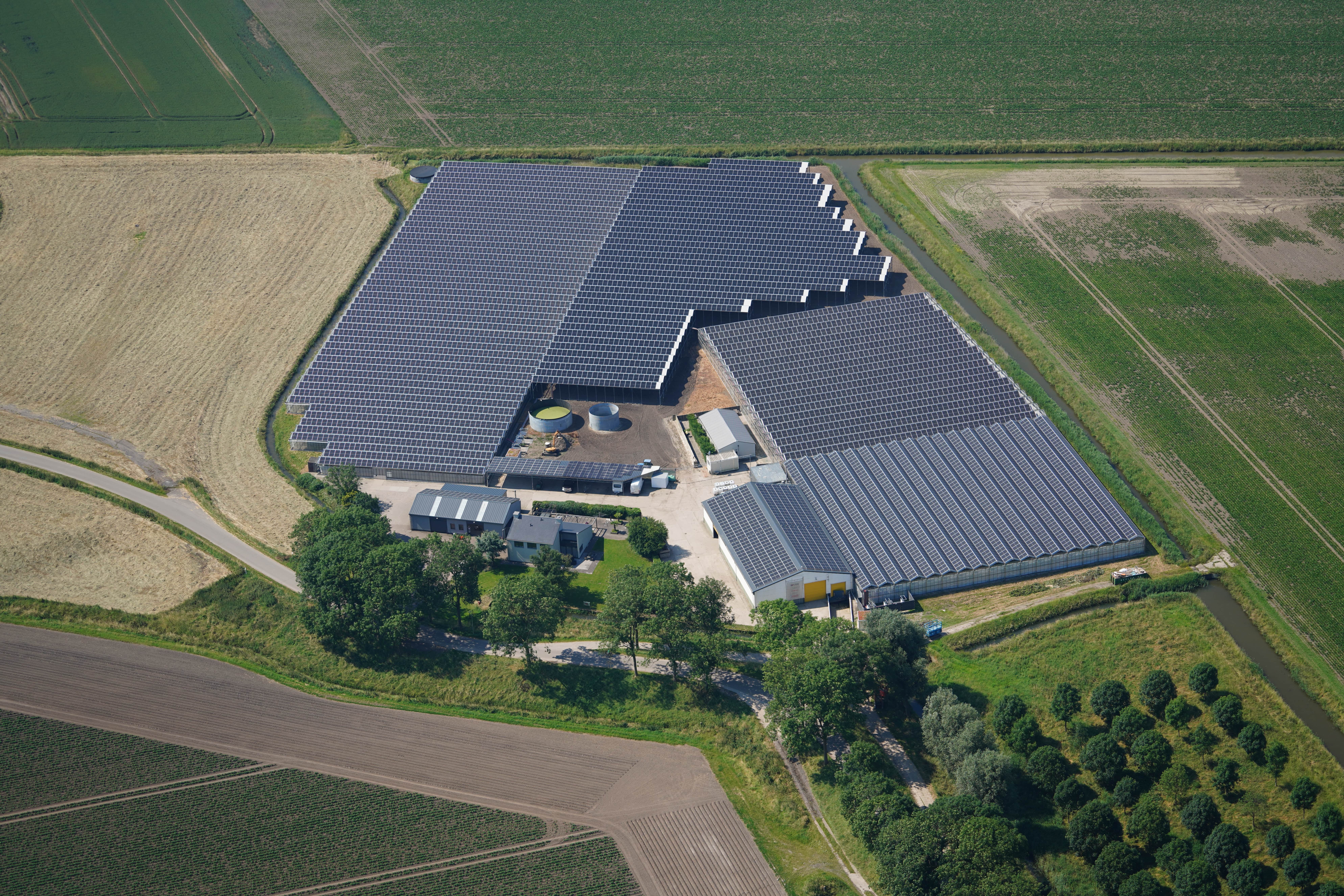
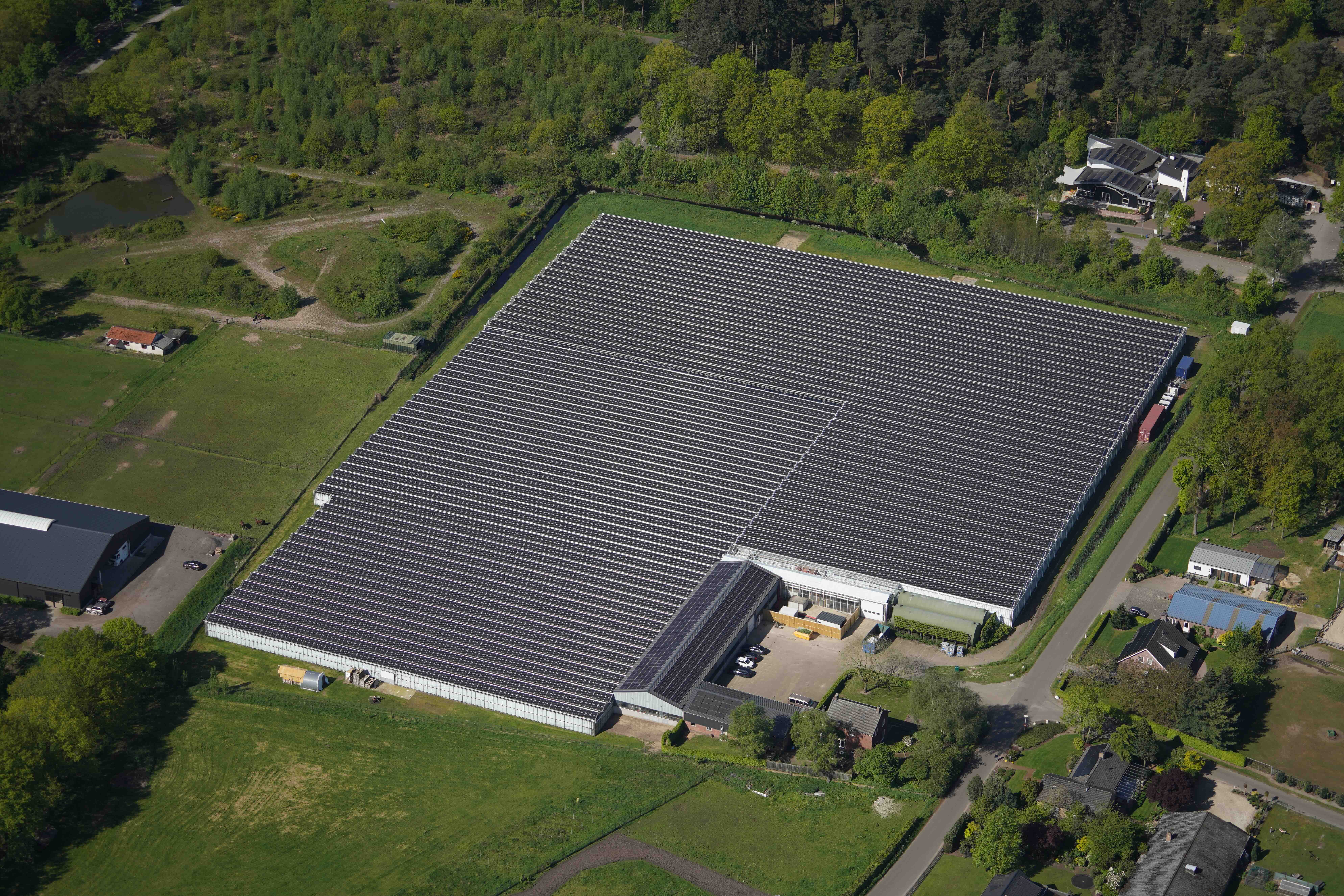
Full-Coverage Roof Solar
Standard opaque PV panels covering the entire south-facing roof sections. Optimal for crops with lower light requirements or for greenhouses with supplemental LED lighting systems already installed.
- Maximum kWp per m²
- Opaque monocrystalline
- Bifacial option
- LED-lit crops
Open-Field Agrivoltaic
Elevated PV rows over open-field crops — a structure that allows tractors to pass beneath while generating electricity above. Suitable for soft fruits, root vegetables, and grazing land.
- 3–5m clearance height
- East-west bifacial rows
- Tractor access maintained
- Crop microclimate benefit
Designed for growers, not just engineers
Greenhouse solar requires horticultural knowledge alongside PV expertise. Our project teams include crop light specialists who work directly with growers to protect yield while maximising energy generation.
Light & Crop Analysis
We model the light requirements of your specific crops against the shading impact of different panel configurations — before any design is committed to.
Light & Crop Analysis
We model the light requirements of your specific crops against the shading impact of different panel configurations — before any design is committed to.
Structural Assessment
Existing greenhouse structures are assessed for load-bearing capacity. Reinforcement specifications are prepared where panels add significant additional weight.
Structural Assessment
Existing greenhouse structures are assessed for load-bearing capacity. Reinforcement specifications are prepared where panels add significant additional weight.
System Design & Permitting
Layout, string design, inverter selection, and grid connection application — coordinated with local DSOs and agricultural planning authorities.
System Design & Permitting
Layout, string design, inverter selection, and grid connection application — coordinated with local DSOs and agricultural planning authorities.
Panel & Structure Installation
Panels are installed during planned maintenance windows to minimise disruption to growing cycles. Temporary lighting bridges any shading transition period.
Panel & Structure Installation
Panels are installed during planned maintenance windows to minimise disruption to growing cycles. Temporary lighting bridges any shading transition period.
Commissioning & Crop Monitoring
Grid commissioning, yield verification, and a 12-month crop monitoring programme to confirm that light transmission targets are met throughout the year.
Commissioning & Crop Monitoring
Grid commissioning, yield verification, and a 12-month crop monitoring programme to confirm that light transmission targets are met throughout the year.
O&M & Annual Light Audits
Annual cleaning, performance audits, and light transmission verification to ensure the solar system continues to comply with the agreed crop impact thresholds.
O&M & Annual Light Audits
Annual cleaning, performance audits, and light transmission verification to ensure the solar system continues to comply with the agreed crop impact thresholds.
Request a free greenhouse solar feasibility study
Tell us your greenhouse size, crop type, and current energy costs — we'll return a light impact model and indicative energy yield within 5 working days.